ViaNova
An AI-powered Career Intelligence Workspace designed to help job seekers preserve context from the first application through the final hiring decision.
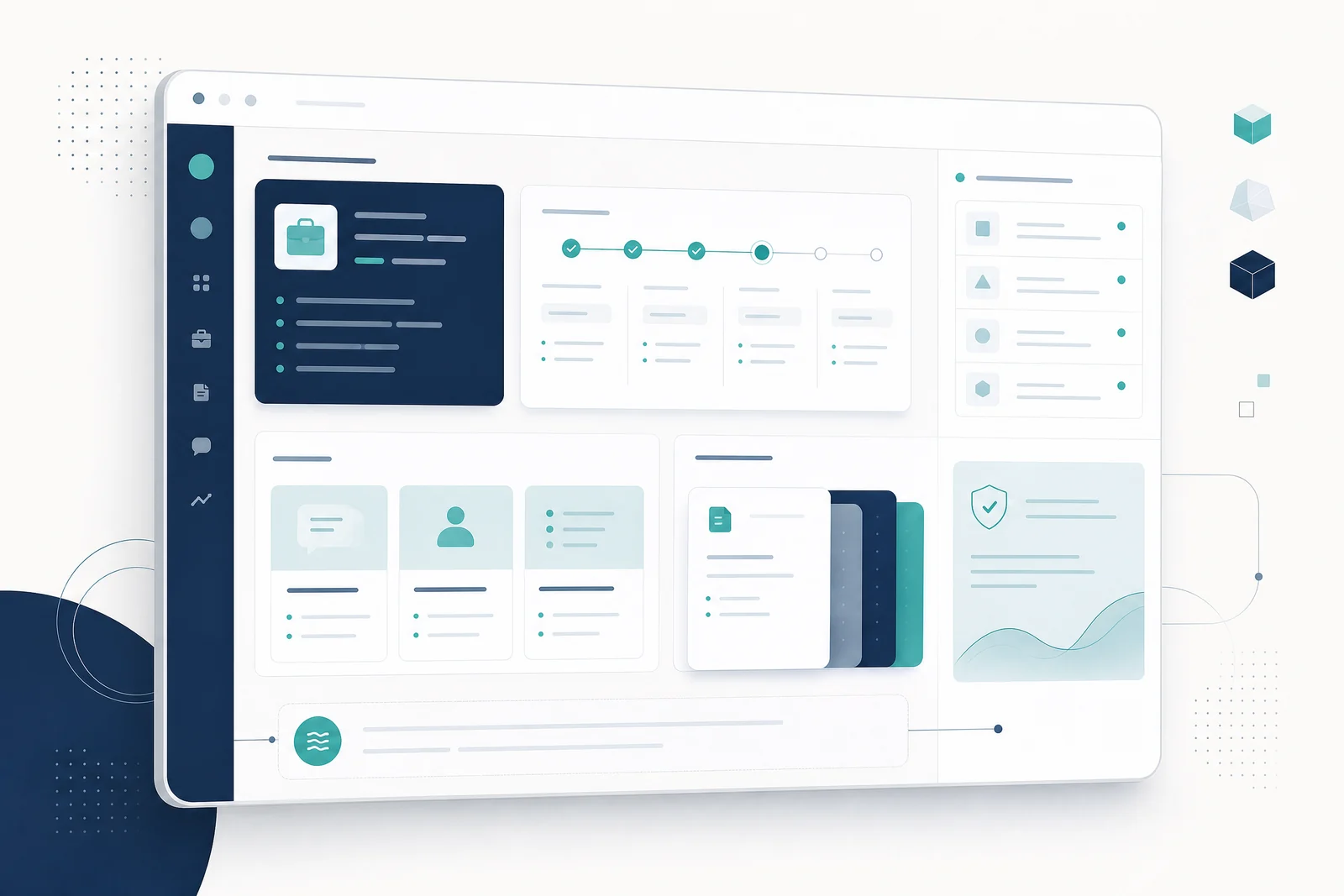
ViaNova started as a response to a practical problem I experienced while applying for remote roles: interview invitations could arrive weeks after an application, when the original job description, resume version, notes, and preparation context were scattered across different tools.
Design principle: every application deserves its own workspace, not a row in a spreadsheet.
Job seekers managing many applications need more than a status tracker. They need to recover what they applied for, why the opportunity mattered, which documents they sent, what they planned to discuss, and what happened next.
- Forgotten job descriptions and application context.
- Multiple resume versions scattered across files and email.
- Interview preparation rebuilt manually after long gaps.
- Timeline notes, documents, and follow-ups split across tools.
This is a self-directed product build. My work covers product framing, the workspace-first experience, architecture, data modeling, implementation planning, and the full-stack foundation.
Instead of treating an application as a spreadsheet row, ViaNova treats it as an evolving project. Each workspace is intended to hold job intelligence, interview preparation, documents, notes, and a timeline in one place.
The foundation uses a layered approach so domain logic is not tightly coupled to the interface or persistence layer. This keeps future AI and automation features additive rather than forcing a rewrite of the core workflow.
Workspace UI, navigation, and product interactions.
Business logic stays separate from framework and database details.
Typed access to relational application, document, and timeline data.
Boundary validation and a conventional delivery foundation.
The current result is a working product foundation and a clearer model for preserving job-search context. I am not claiming production adoption, user counts, or measured time savings yet. The linked application currently opens an authentication screen, so the portfolio uses representative layout previews rather than presenting it as a public, anonymous demo.
Starting with the domain and boundaries made the product easier to extend conceptually. It also clarified that the valuable unit is not “an application record” but the context a person needs when that opportunity becomes important again.
A self-directed product build for a fragmented job-search workflow.
ViaNova is a personal product project, not a claim of commercial recruitment deployment. The goal is to centralize application context, preserve useful job information, support interview preparation, and create a foundation for automation.
Store the opportunity, documents, notes, and timeline as one evolving workspace.
Support extraction and structured fields without treating AI output as unquestioned truth.
Make preparation build on the history of the application instead of starting from scratch.
Keep the domain and persistence layers separable so future workflows can be added safely.
The hard part was preserving useful context without making the system brittle.
- Data boundaries: application, document, timeline, and interview data need relationships that remain understandable as the product grows.
- AI boundaries: extraction and preparation features should produce structured, reviewable information rather than silently changing the source of truth.
- Scope control: separating the shipped foundation from planned job intelligence keeps the current status honest.
See the reasoning behind the build.
The companion article explains the problem, stack, and sprint decisions in more detail.